Best Exercises for Hip Pain Relief in Seniors — Gentle Moves That Make a Real Difference
Hip pain has a way of becoming the quiet ruler of your day. It decides whether you go to the farmer’s market. It determines how long you can stand at a family cookout. It makes you think twice about the garden, the grandkids, the morning walk you used to take without a second thought. You didn’t sign up for any of that. But here you are, negotiating with a joint that used to just… work.
The frustrating part is that most people’s instinct — rest, avoid, protect — actually makes things worse over time. Hip pain responds to movement. The right kind of movement. And figuring out exactly what that looks like is what this article is about.
My neighbor Frank told me something that stuck with me. He’s 71, former contractor, spent decades on his feet and his knees. His hip had been bothering him for about two years — deep ache on the left side, worst first thing in the morning and after driving. He’d cut back on everything physical because he was convinced moving it more would cause damage. His physical therapist finally sat him down and explained it plainly: the muscles around his hip had gotten so weak from disuse that the joint itself was bearing load it was never designed to handle alone. “I thought I was protecting it,” Frank said. “Turns out I was just making it worse.” He started doing targeted exercises three times a week. Eight weeks later he was back doing light yard work. Not pain-free — but functional. Mobile. Himself again.
That’s what the right exercise program can do for hip pain. Let’s get specific about what it actually looks like.
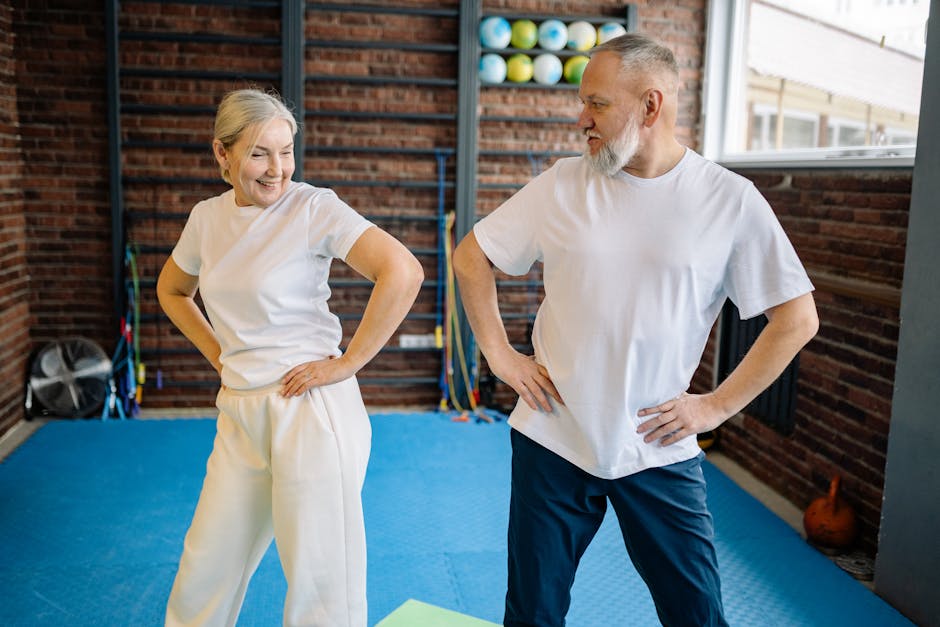
Photo by Yan Krukau on Pexels
Why Hip Pain Gets Worse When You Stop Moving
Before the exercises, it helps to understand the mechanics — because once you understand why movement helps, you’re a lot more likely to actually stick with it.
The hip is the largest ball-and-socket joint in your body, and it depends on a network of surrounding muscles — glutes, hip flexors, hip abductors, deep rotators — to stay properly aligned and absorb the forces of daily movement. When those muscles weaken, which happens faster than most people expect with even moderate inactivity, the joint itself takes on mechanical stress it isn’t designed to handle alone. That increased stress on already worn cartilage and joint tissue translates directly into more pain, more inflammation, and more stiffness.
There’s another piece to this. The cartilage inside your hip joint has no blood supply of its own. It gets nutrients through movement — through the compression and decompression that happens when you walk, stand, and shift your weight. Long stretches of inactivity deprive the cartilage of those nutrients and allow inflammatory fluid to pool in the joint rather than circulate through it.
Ever notice your hip actually feels better after a short walk than it did when you first got out of bed? That’s exactly this process. Movement nourishes the joint. Rest, beyond what’s genuinely needed, starves it.
The goal isn’t to push through sharp pain or try to out-exercise a serious injury. It’s to load the hip appropriately — through targeted, controlled movements — so the surrounding muscles rebuild their protective capacity and the joint gets what it needs to stay healthy.
Photo by Kampus Production on Pexels
Strengthening Exercises That Actually Protect the Hip Joint
These are the moves that matter most. They’re not flashy. They’re not hard to do. But done consistently, they rebuild the muscular support the hip depends on — and that’s what produces lasting relief rather than just temporary comfort.
Glute bridges. Lie on your back with knees bent, feet flat on the floor about hip-width apart. Press through your heels and slowly lift your hips off the ground until your body forms a straight line from your knees to your shoulders. Hold for two to three seconds at the top, then lower slowly. That’s one rep. Do ten to fifteen. This is one of the best exercises you can do for hip pain — it activates the gluteus maximus and hamstrings simultaneously without putting any compressive load on the hip joint itself. Start without weight. Master the form. The slow lowering phase matters as much as the lift.
Clamshells. Lie on your side with hips and knees bent at about 45 degrees, feet stacked together. Keeping your feet touching, slowly raise your top knee toward the ceiling as far as you comfortably can — like a clamshell opening. Hold a second at the top, then lower with control. Ten to fifteen reps per side. This isolates the gluteus medius, a small muscle on the outer hip that’s critical for stability during walking. Weakness here is one of the most common contributors to hip pain in older adults, and it’s one of the most overlooked.
Standing hip abduction. Stand near a wall or sturdy chair for balance. Keep both legs straight and slowly lift one leg out to the side — not in front, directly to the side — about twelve to eighteen inches. Hold briefly, then lower with control. Do this slowly; momentum defeats the purpose. Ten to twelve reps per side. This strengthens the outer hip stabilizers that take load off the joint during every step you take.
Seated hip flexor march. Sit upright in a firm chair, feet flat on the floor. Slowly lift one knee toward the ceiling, hold for two seconds, then lower. Alternate sides for twenty total repetitions. Simple as it looks, this activates the hip flexors and deep core simultaneously — muscles that tend to weaken dramatically in people who sit for long portions of the day.
Mini squats. Stand with feet hip-width apart, holding a chair back or counter for support. Slowly lower yourself as if you’re about to sit — just four to six inches down — then press through your heels to stand back up. That shallow range avoids excessive hip compression while still building the quadriceps and glute strength that supports the joint from above. Ten to twelve reps, slow and controlled.
Stretching Exercises to Relieve Hip Tightness
Tight hips are almost universal in adults over 55 — and honestly in most Americans regardless of age, given how much time we all spend sitting. Tight hip flexors pull the pelvis into an anterior tilt, which compresses the hip joint and strains the lower back. Tight piriformis muscles deep in the buttock can cause hip pain that radiates down the leg and gets mistaken for sciatica. Stretching isn’t optional — it’s essential.
Figure-four stretch. Lie on your back with knees bent. Cross your right ankle over your left thigh, just above the knee. Flex your right foot gently. You might already feel a stretch in the outer right hip. To deepen it, slowly pull your left thigh toward your chest. Hold for thirty to forty-five seconds, then switch sides. This is one of the most effective stretches for the piriformis and deep hip rotators — muscles that are frequently tight in people with hip pain and rarely get the attention they need.
Kneeling hip flexor stretch. Kneel on your right knee with your left foot forward — a gentle lunge position. Keep your torso upright and gently push your hips forward until you feel a stretch at the front of the right hip. Hold twenty to thirty seconds. Switch sides. If getting down to the floor is difficult, do the standing version: step one foot back, keep the back leg straight, and tuck the pelvis slightly forward. Same stretch, different position.
Supine knee-to-chest. Lie on your back and gently pull one knee toward your chest with both hands. Hold for twenty to thirty seconds — you should feel a release in the hip and lower back simultaneously. Alternate sides. Many people find this one particularly helpful first thing in the morning before they’ve started moving, when hip stiffness tends to be at its worst.
Seated piriformis stretch. Sit in a chair and cross your right ankle over your left knee. Sit tall, then slowly lean forward from the hips — not the waist — until you feel a stretch in the outer right hip and buttock. Hold thirty seconds per side. This is the chair-friendly version of the figure-four and works just as well for people who find floor exercises uncomfortable.
Low-Impact Cardio That Keeps the Hip Moving Without Overloading It
Targeted exercises build the strength and flexibility your hip needs. But regular cardiovascular movement keeps the joint nourished, supports healthy body weight — which directly reduces hip load — and maintains the overall conditioning that makes everything else easier.
Walking is still the foundation. Even twenty minutes at a comfortable pace provides meaningful joint nourishment and keeps the surrounding muscles engaged. Soft surfaces — grass, a rubberized track, packed dirt — are significantly kinder to the hip than concrete or asphalt. Supportive footwear matters more than most people think; old, worn-out shoes change how force travels up through the joint with every step.
Swimming and water aerobics are exceptional for hip pain specifically. Buoyancy reduces compressive load on the joint dramatically — some estimates put it at 80 to 90 percent reduction compared to land-based movement. You can move through a full range of motion, build strength, and get genuine cardiovascular benefit with virtually none of the mechanical stress. If you have access to a pool, it’s worth prioritizing.
Stationary cycling is another strong option. Keep the seat high enough that your knee is almost fully extended at the bottom of the stroke, resistance low, and cadence comfortable. Twenty to thirty minutes, three or four times a week, supports both hip mobility and overall fitness without the impact loading that aggravates inflamed tissue.
Tai chi deserves a special mention. It looks gentle — it is gentle — but the balance, coordination, and controlled movement it requires activates exactly the hip stabilizers that pain sufferers need most. Multiple studies in older adults have found significant improvements in hip and knee pain with regular tai chi practice, along with reduced fall risk, which matters more the older we get.
Building a Routine That Sticks
The most effective exercise program is the one you actually do consistently. That sounds obvious, but it’s where most people fall down — too much too soon, soreness discourages them, and then nothing.
Start with three sessions per week. Pick two strengthening exercises and two stretches. Keep each session to twenty minutes or less. That’s it. You’re not trying to transform your body in a week — you’re building a habit and letting your muscles adapt at a pace they can sustain.
Track your hip pain each morning on a simple one-to-ten scale. Most people are surprised to discover their scores actually trend downward over four to six weeks of consistent movement — not upward, which is what they feared. That feedback is genuinely motivating and helps you distinguish between productive muscle soreness and actual joint irritation that warrants slowing down.
Don’t skip the stretches to save time. A lot of people do the strengthening work and skip the stretching because it feels less productive. It isn’t. Tight hip flexors and piriformis muscles will limit the effectiveness of every strengthening exercise you do. Five minutes of stretching after each session is five minutes well spent.
Give it six to eight weeks before drawing conclusions. That’s the minimum time frame for meaningful muscular adaptation — for the protective layer of strength around the hip to actually develop and start making a difference in how the joint feels during daily life. It’s slower than we want… but it’s real.
Always consult your doctor before starting any new supplement or exercise program. Individual results may vary.