How to Reduce Knee Inflammation Naturally — Real Strategies That Hold Up Over Time
If you’ve been looking for ways to reduce knee inflammation naturally, the good news is that you have more options than most doctors have time to discuss in a fifteen-minute appointment. The less convenient news is that none of them work overnight. What does work — consistently, meaningfully, across a wide body of research — is a layered approach that addresses inflammation at its source rather than just muffling the signal it’s sending. That’s what this article is about. Not a quick fix. A real one.
My neighbor Rosemary — 69, former elementary school principal, someone who spent four decades on her feet managing chaos with a smile — told me she almost gave up trying natural approaches entirely. She’d tried turmeric capsules from the discount store for two weeks, felt nothing, and concluded it was all hype. What she didn’t know was that the formula she’d bought had almost no bioavailable curcumin in it. “I was basically taking flour,” she said. Once she understood what actually made supplements work — and why — she tried again with the right products. Combined with some targeted dietary changes and a walking routine she actually stuck to, the difference in her knee over the following three months was, in her words, “night and day.” Not perfect. But livable again. Active again. Hers again.
Rosemary’s story is more common than you’d think. The approach works. The details matter enormously. Let’s get into both.
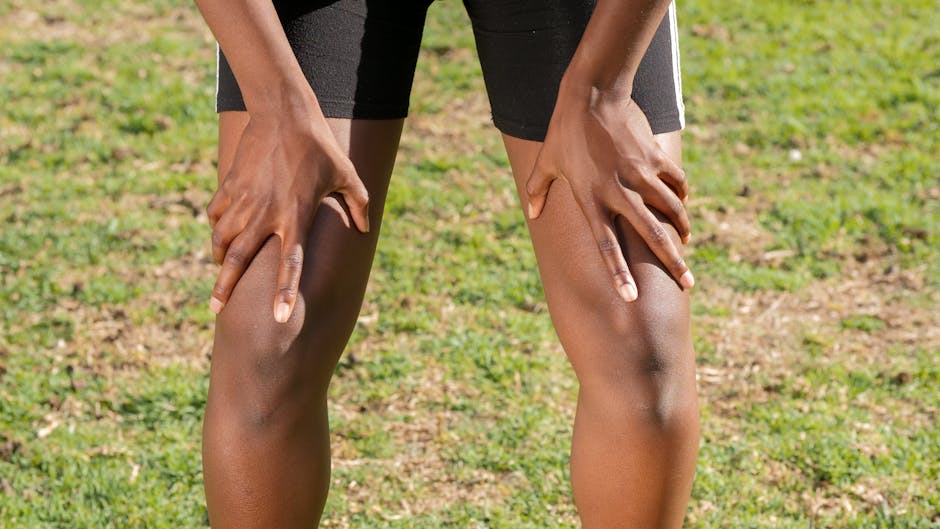
Photo by Kindel Media on Pexels
The Inflammation Loop — And How to Break It
Knee inflammation in your 60s rarely has a single cause. It’s a loop. Cartilage thins with age, creating friction and irritation inside the joint. The synovial membrane responds by producing excess fluid — that’s the swelling you can see and press on. The immune system releases inflammatory proteins called cytokines that amplify pain signals and accelerate the breakdown of surrounding tissue. The damage triggers more inflammation. The inflammation causes more damage. Round and round it goes.
What breaks that loop isn’t treating one part of it in isolation. It’s reducing the body’s overall inflammatory load — the systemic, whole-body inflammation that’s been quietly running in the background for years before it showed up in your knee. That systemic inflammation is shaped by things you have genuine control over: what you eat, how you sleep, your stress levels, whether you move regularly. Change those inputs and the knee — already the weakest link — is often the first place you notice the difference.
According to the Mayo Clinic, lifestyle modifications including weight management, exercise, and dietary changes play a significant role in managing joint inflammation — often as effectively as short-term medication for mild to moderate cases. That’s not alternative medicine. That’s mainstream medical consensus.
Photo by Towfiqu barbhuiya on Pexels
Build Your Diet Around Inflammation Control
You don’t need a special eating plan. You need a few consistent upgrades that shift your body’s inflammatory baseline over time.
Start with omega-3 fatty acids. Fatty fish — salmon, sardines, mackerel, trout — are the most powerful food source of EPA and DHA, the specific omega-3s that directly suppress the enzymes producing inflammatory signals in your joints. Aim for two to three servings per week. This single dietary shift has more clinical evidence behind it than almost any other food-based intervention for joint inflammation. If you genuinely can’t stomach fish regularly, an algae-based omega-3 supplement delivers the same EPA and DHA from the original source.
Extra virgin olive oil belongs in your kitchen and your daily cooking. It contains oleocanthal — a polyphenol that inhibits COX-1 and COX-2 inflammatory enzymes through the same mechanism as ibuprofen, without the gastrointestinal consequences of long-term NSAID use. Three tablespoons a day is the target most research points toward. Switch from whatever refined oil you’ve been using and don’t look back.
Tart cherry concentrate deserves a spot in your morning routine. Multiple clinical studies have found it lowers C-reactive protein and uric acid — two markers directly tied to joint inflammation and flare frequency. It sounds too simple to matter. It isn’t. A small glass every morning adds up quietly over months in a way that shows up in how your knee feels.
The other side of the equation is just as important. Refined sugar causes inflammatory cascades every time it spikes blood sugar — which is every single time you eat it. Ultra-processed snack foods and fast food cooked in cheap seed oils are loaded with omega-6 fatty acids that push your body’s inflammatory balance in the wrong direction at scale. You don’t need to be perfect. But if those foods are daily habits, they’re actively feeding the inflammation you’re trying to reduce. No supplement stack compensates for that.
For a deeper look at anti-inflammatory eating patterns and other approaches that complement what’s covered here, visit more natural health tips on the VixaWell blog.
The Supplements Worth Actually Taking
The supplement market is full of products that make big claims and deliver very little. Here’s the short list of what the research actually supports — and the details that make the difference between results and disappointment.
Curcumin is the most clinically validated natural anti-inflammatory compound we have. It works by blocking NF-kB — a protein complex that acts as a master regulator for inflammatory gene expression throughout the body. Randomized controlled trials have consistently shown significant reductions in knee pain and swelling with daily curcumin supplementation. But — and this is the critical part Rosemary learned the hard way — standard turmeric powder absorbs terribly. Most of it never reaches your bloodstream in meaningful concentrations. You need a formulation with piperine (black pepper extract), or one using liposomal, phytosome, or nanoparticle delivery technology. That’s not a marketing distinction. It’s a pharmacological one. Check the label before you buy anything.
Fish oil in supplement form fills the gap on days and weeks when fatty fish isn’t on the menu — which is most days for most people. Don’t get tripped up by the label: what matters is the combined EPA plus DHA content, not the total fish oil amount, which is a different and less relevant number. Research supporting meaningful anti-inflammatory joint benefits generally uses 2,000 to 3,000 mg of combined EPA and DHA daily.
Boswellia serrata — derived from frankincense resin — targets a specific inflammatory enzyme called 5-LOX that’s directly involved in joint tissue breakdown. Several well-designed controlled trials have found it meaningfully reduces knee swelling and morning stiffness, and its effects sometimes appear faster than curcumin — some people notice a change within seven to fourteen days. It works through a different pathway than curcumin, which is precisely why combining them makes sense for persistent inflammation.
Magnesium glycinate is the quiet one that often gets overlooked. Magnesium deficiency — widespread in adults over 55 — independently elevates systemic inflammatory markers. It’s not a direct anti-inflammatory, but correcting a deficiency removes a steady background contributor that keeps the immune system running hotter than it needs to. Magnesium glycinate specifically is well-absorbed and gentle on the stomach. Taking it before bed also supports sleep quality — which connects directly to the next section.
Movement That Helps the Knee Rather Than Loading It
The instinct to rest an inflamed knee is understandable. And sometimes, during a true acute flare with visible swelling and heat, two or three days of reduced activity is the right call. But chronic rest — weeks and months of avoiding movement to protect the knee — consistently makes things worse. Not better.
Knee cartilage has no direct blood supply. Zero. It gets its nutrients through movement — through the compression and decompression that happens when you walk, shift your weight, and bend the joint. Synovial fluid, the joint’s internal lubricant, circulates during activity and pools during inactivity. Prolonged rest starves the cartilage and allows inflammatory byproducts to accumulate in the joint space rather than clear out.
Ever notice your knee feels less stiff and more comfortable after a gentle walk than it did when you first got up? That’s not your imagination. That’s synovial fluid circulation and cartilage nourishment happening in real time.
The right kind of movement is low-impact and consistent. Walking on soft surfaces — grass, a rubberized track, packed dirt rather than concrete — keeps the joint nourished without excessive stress. Swimming or water aerobics remove most compressive load while allowing full range of motion. Stationary cycling at light resistance supports both joint mobility and the surrounding muscle conditioning that protects the knee over the long term.
Speaking of muscle conditioning — strengthening the quadriceps is one of the most important things you can do for a chronically inflamed knee. Strong quads act as shock absorbers, reducing the force that reaches the joint itself with every step you take. Seated leg raises, straight leg raises lying on your back, and shallow wall sits all work toward this without excessive joint loading. Start easy. Be consistent. The protective effect builds over weeks, not days.
For immediate symptom management: ice during active flares — twenty minutes on, cloth between the pack and skin, forty minutes off — slows fluid accumulation and puts the brakes on acute inflammation. Heat for chronic morning stiffness — fifteen to twenty minutes of warmth before you start moving — improves synovial fluid flow and loosens the muscles that have tightened overnight around a sore joint. Get that sequence right and both tools become significantly more effective.
Sleep, Stress, and Weight — The Three Silent Drivers
People make real dietary changes, start taking the right supplements, get moving regularly… and then wonder why their knee is still flaring. Usually it comes back to one of these three things they haven’t fully addressed.
Sleep deprivation raises pro-inflammatory cytokines throughout the body — measurably, reliably, every time. Adults consistently sleeping fewer than seven hours show significantly elevated IL-6 and C-reactive protein compared to well-rested adults of the same age. If you’re managing diet and supplements and exercise but running on five or six hours of sleep, that sleep deficit is a sustained source of systemic inflammation that actively counteracts everything else you’re doing. It’s not a secondary concern. Fix the sleep.
Chronic psychological stress keeps cortisol elevated. Sustained elevated cortisol maintains inflammatory pathways in a state of ongoing activation — the body’s stress response and its inflammatory response are deeply, functionally intertwined. Fifteen minutes of genuine stress reduction daily — slow breathing, walking outside, time with people you like, whatever actually works for you — shifts inflammatory markers over time in ways that show up in blood work. Not soft advice. Biology.
Body weight affects the knee in two distinct ways that both matter. Mechanically: each extra pound adds roughly four pounds of compressive force on the knee with every step — an enormous cumulative load over the course of a day on tissue that’s already inflamed. Metabolically: adipose tissue continuously releases pro-inflammatory hormones into circulation, meaning excess body fat is itself an active, ongoing contributor to the systemic inflammation feeding your knee. Even ten to fifteen pounds of weight loss produces measurable improvements in both pain and swelling for most people — and the anti-inflammatory dietary changes that support weight loss help the knee directly at the same time.
The pattern that produces real, lasting improvement layers all of this together. Curcumin and fish oil daily. Anti-inflammatory foods as the consistent foundation. Gentle movement three to five times a week. Seven to eight hours of sleep. Stress that’s managed rather than accumulated. These aren’t separate interventions — they’re a system. And like any system, it works best when the pieces work together… consistently, patiently, over the weeks and months it takes to actually shift a body that’s been inflamed for years.
That’s what Rosemary did. That’s what the research points toward. And that’s what’s worth committing to.
Always consult your doctor before starting any new supplement or exercise program. Individual results may vary.